

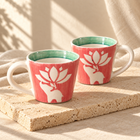




A weekday. No guests. No occasion.

The good cups usually sit behind glass, don’t they — polished, protected, waiting for something that feels important enough. In most Indian homes, good crockery is brought out only for an occasion, and more often than not, that occasion never really comes. So the cups wait. And somewhere along the way, we learn to wait with them.
Using the good cups on a Tuesday isn’t about indulgence or rebellion. It’s about expression. It’s about how we show up for ourselves in the small, silent moments, when there’s no audience, no applause, no reason other than wanting to.
We’ve grown up with a deep sense of preservation. Save the best. Store it safely. Use it sparingly. Keep it aside for later, or for someone else. And while that instinct comes from care, it slowly turns into postponement — pleasure deferred, presence delayed, the everyday overlooked.

I read something in The Hindu that stayed with me. Archaeologist, caterer, and writer Rhea Mitra Dalal spoke about heirloom dinnerware not as objects meant to be protected, but as things meant to be lived with. She uses her pale blue Noritake set passed down from her mother-in-law, and a Royal Albert dinner set her father once bought her mother on his first trip abroad. Her mother never used it, saving it instead. Rhea insists on the opposite. Because preservation, she says, begins by using the pieces.
That thought lingered.
A vintage cup from the 60s isn’t meant to gather dust in a cupboard. It isn’t a relic. It’s a breathing memoir — holding hands, habits, and histories; mornings made and missed; homes that once hummed with life. Every time you reach for it, you keep it alive.

Using that mug that reminds you of something beautiful or meaningful isn’t selfish. Many of us grew up with a scarcity mindset, believing the best things must be saved for later or reserved for others. But it’s 2026, and as more of us learn how to enjoy our own company, maybe we also need to allow ourselves objects that spark something soft and sustaining, without permission.
So what if you want to make yourself tea the way you would at a hill hotel — where the tray is hand-embossed silver, the teacup is vintage, hand-painted porcelain, and the steam is held under a tea cosy the way curtains rise before a show. So be it. These small, sustaining pleasures don’t need to be earned.
Celebrate the everyday too. Because sometimes the magic really does lie in the mundane. And sometimes the cup tastes better not because of the tea, but because you didn’t wait to deserve it.

Leave a comment
All comments are moderated before being published.
This site is protected by hCaptcha and the hCaptcha Privacy Policy and Terms of Service apply.